SEAMLESS at LOGISTOP 2026: From Autonomous Vessels to Integrated Logistics Solutions
- 16/10/2026
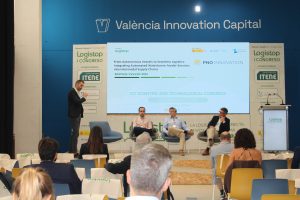
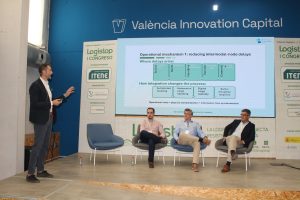
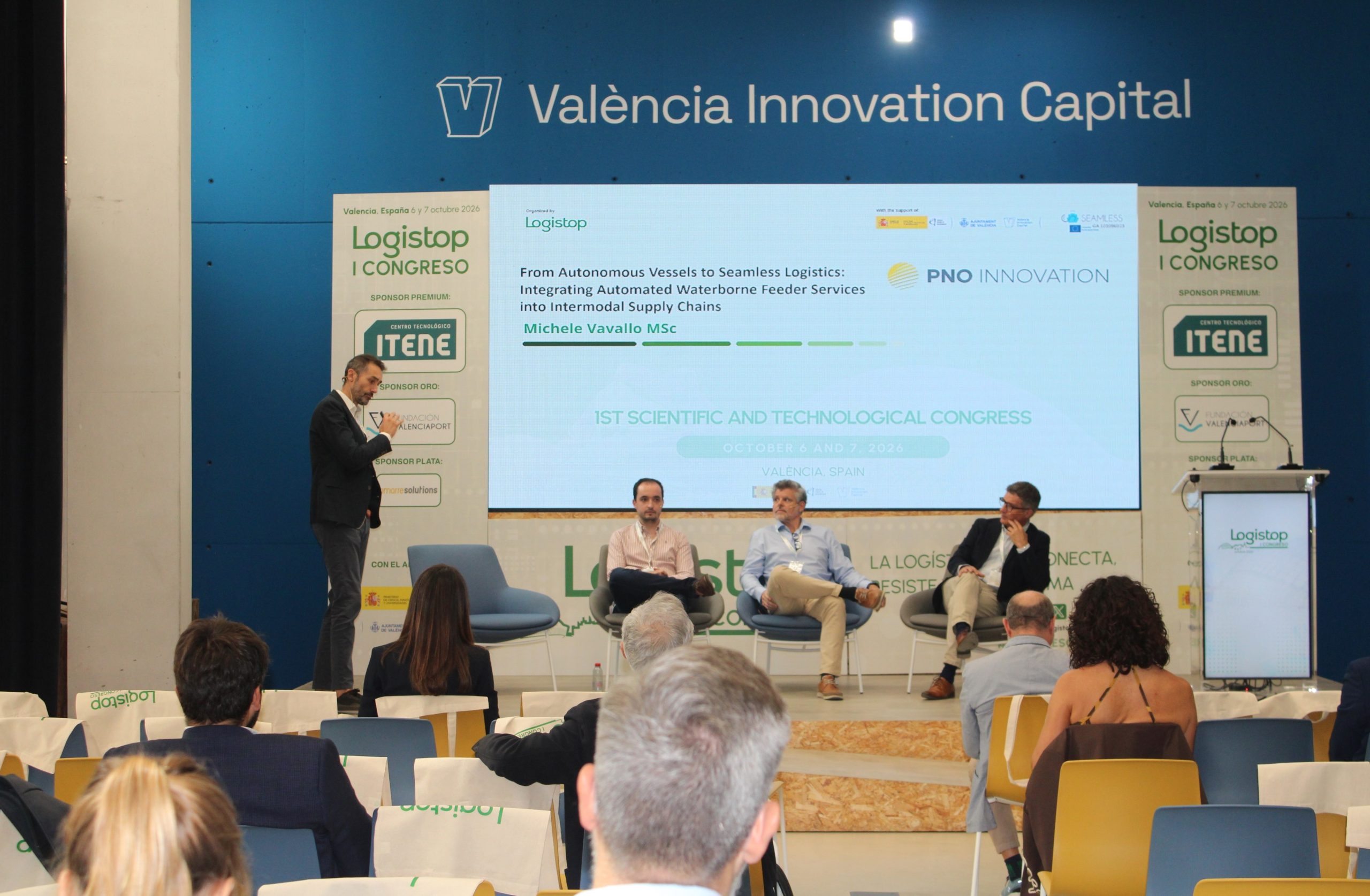
On 7 October 2026, the SEAMLESS project participated in the 1st LOGISTOP Scientific and Technological Congress in Valencia, Spain, contributing to discussions on the role of autonomous technologies in transforming logistics and intermodal transport.
During the session dedicated to Applications of Autonomous Vehicles in the Logistics Sector, Michele Vavallo from PNO Innovation presented “From Autonomous Vessels to Seamless Logistics: Integrating Automated Waterborne Feeder Services into Intermodal Supply Chains”, sharing insights and emerging results from SEAMLESS research and use-case assessments.
The presentation highlighted a central conclusion: the benefits of autonomous waterborne transport depend not only on vessel automation, but on its effective integration into the wider logistics system.
SEAMLESS investigates how autonomous vessels can operate alongside automated mooring and cargo-handling systems, Remote Operations Centers, digital coordination platforms and hinterland transport services. This integrated approach can help reduce delays at intermodal nodes, improve resource utilization and strengthen coordination between transport modes. The presentation illustrated these opportunities through two SEAMLESS use cases. In Ågotnes–Bergen (Norway), an autonomous battery-electric maritime shuttle could reduce annual road freight activity by approximately 87%, generating around EUR 1,91 million in annual operating-cost savings compared with the road-based reference scenario, without assuming additional freight demand. In the Antwerp–Duisburg and Antwerp–Dourges inland waterway cases, autonomous operation could increase vessel availability by reducing onboard crew-rest constraints, enabling approximately 7.200 additional TEU of annual transport capacity across the two corridors.
These findings demonstrate that the economic value of autonomy depends on the specific logistics configuration. Benefits may arise from reduced road transport costs, increased vessel utilization, higher transport capacity or improved operational efficiency. However, their realization remains dependent on freight demand, investment costs and effective integration with supporting infrastructure.
Beyond financial performance, the presentation highlighted potential environmental and socioeconomic benefits, including reduced emissions and road transport impacts, improved cargo visibility and greater logistics resilience. These wider effects depend on effective coordination between physical operations, digital systems and transport stakeholders.
The contribution to LOGISTOP 2026 reinforced a key message emerging from SEAMLESS : autonomous waterborne transport should be assessed as an integrated logistics-system innovation, rather than as a standalone vessel technology.
By sharing these results, SEAMLESS contributed to the discussion on how automated waterborne feeder services can progress towards economically viable, sustainable and resilient intermodal logistics solutions across Europe.